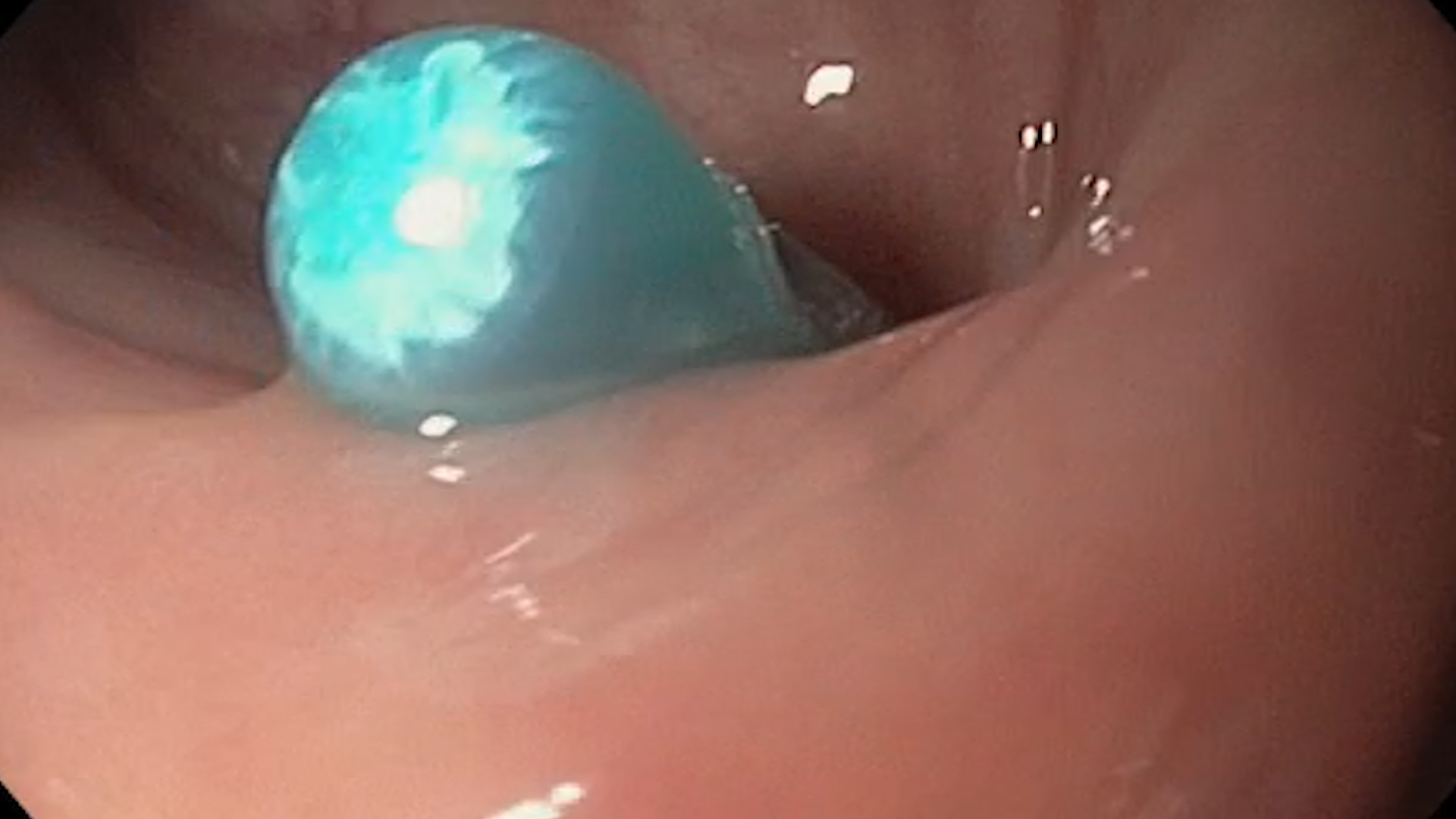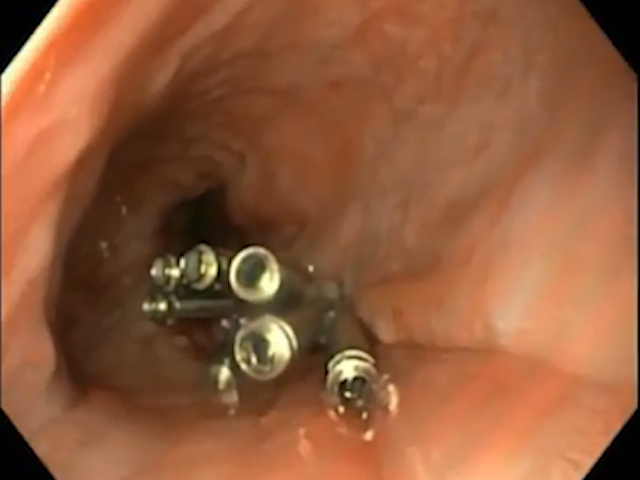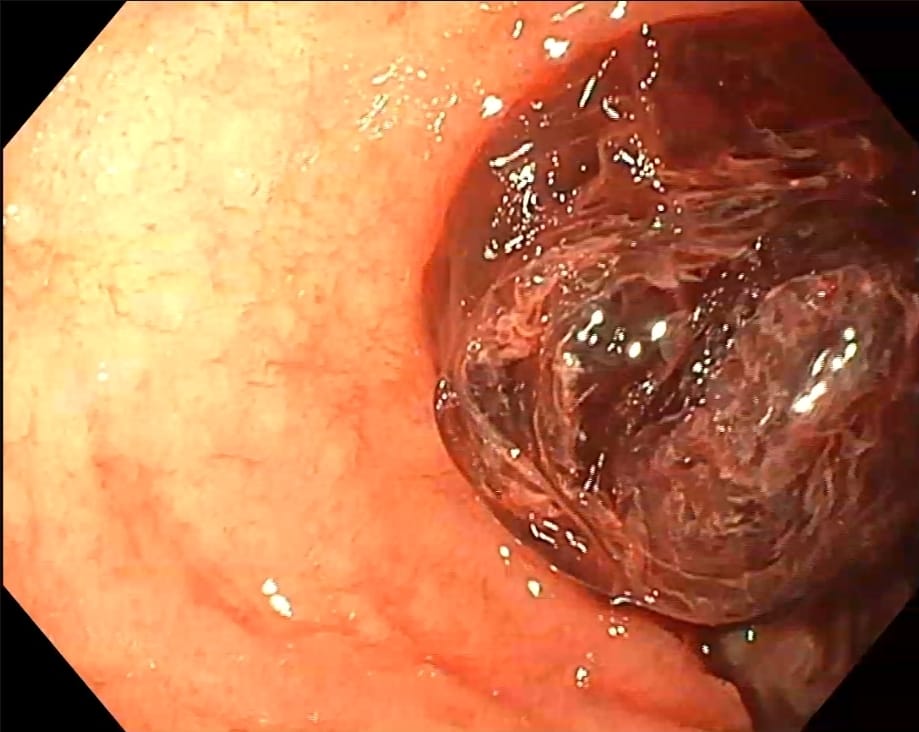
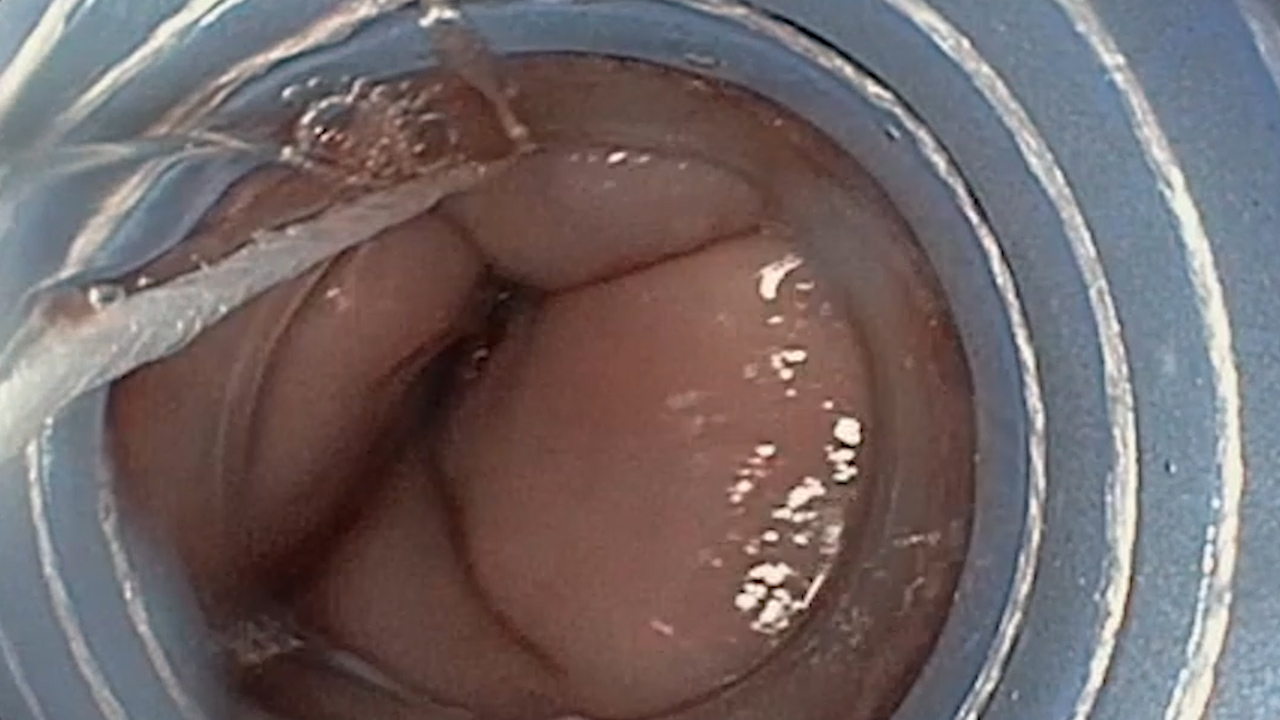
Aorto-enteric fistula
History
A 84-year-old patient with a history of high blood pressure and smoking presented to the emergency room with lower abdominal pain and marked physical asthenia. At the Emergency Department, the patient presented hematochezia.
Clinical & biological
Clinical: hemodynamically stable, lower abdominal pain with no signs of peritoneal irritation.
Biological: WBC 32700 /microL, hemoglobin=8.1 g/dL, PLT = 321 000 /microL, INR=1.23, creatinine =1.4 mg/dl, Na=136 mmol, K=5.3 mmol, CRP = 292 mg/L, procalcitonin = 2.32 ng/mL.
Imaging
Given the symptoms, it was decided to urgently perform a CT scan with contrast:
- No contrast extravasation in the digestive tract, instead: infrarenal aortic aneurysm (130 mm cranio-caudal), with parietal thrombus, cuffed by a collection suggestive of a retroaortic abscess
- The aneurysm + the collection formed a forceps that almost completely stenoses the inferior vena cava; superior mesenteric artery with severe atheroma and thready flow.
Diagnosis
Discussion
Aortoenteric fistula is a rare cause of frequently fatal gastrointestinal bleeding, difficult to diagnose. Mortality is approximately 77% with treatment and 100% without treatment. Most often the fistula occurs at the duodenal level. Aortoenteric fistulas are of 2 types:
1. Primary: most often an aneurysm with compression of the digestive tract, tumors, foreign bodies, radiotherapy
2. Secondary (most common): erosion after aortic graft
Conclusions
The particularity of the case was represented by the rare cause and the difficult diagnosis of the upper digestive hemorrhage through the aortoenteric fistula. The approach and treatment required a multidisciplinary team and good cooperation / coordination between the different departments for a fast and effective treatment, often this complication of the aneurysm being fatal.
The patient was discharged after 17 days with a good general condition.
References
1.Yang Y, Hu D, Peng D. Primary aortoesophageal fistula: a fatal outcome. Am J Emerg Med 2018; 36: 343.e1–343.e3.
2.Saers SJ, Scheltinga MR. Primary aortoenteric fistula. Br J Surg 2005; 92: 143–152.